
Smart home technology has never been more accessible. Today, homeowners can buy a few smart speakers, plugs, bulbs, cameras, or thermostats online and create a basic connected home in a weekend. At the same time, professionally installed automation systems offer a much deeper level of control, integration, and performance. That leaves many homeowners asking the same question: should you build a DIY smart home yourself, or invest in professional automation? The answer depends on what you want your system to do, how reliable you need it to be, and whether you are building a simple collection of devices or a truly connected home. In this post, we will break down the key differences between DIY smart homes and professional automation, explain where each option works best, and help readers understand when it may be worth partnering with an expert.
What Is a Professionally Automated Home?
A professionally automated home is not just a house with connected gadgets.
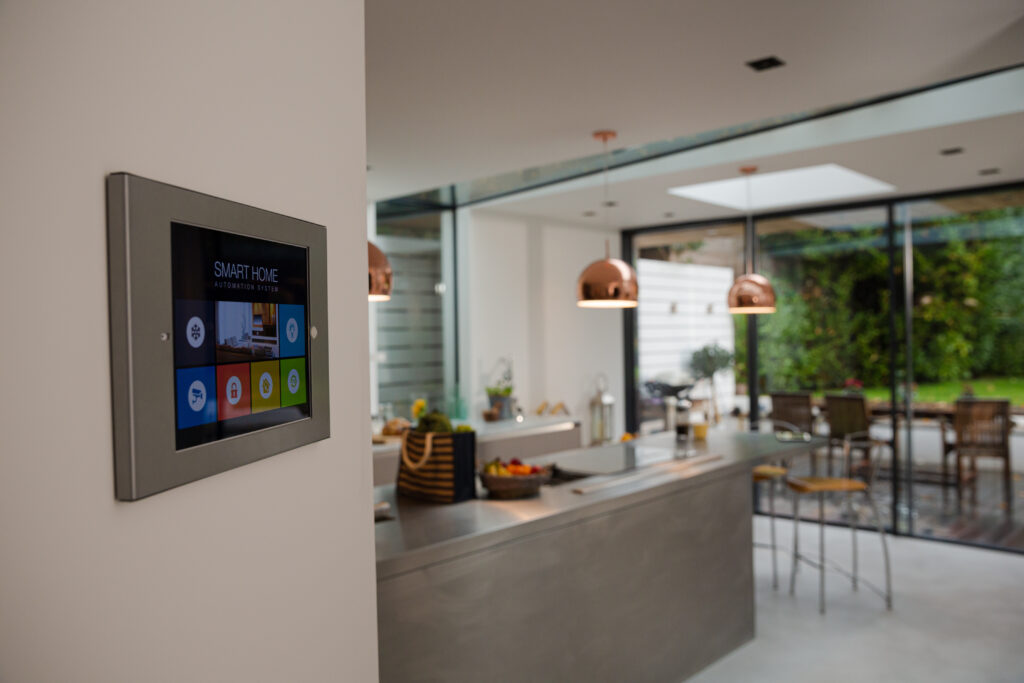
It is a home where lighting, climate, shades, audio video, security, access control, and networking are designed to work together through a unified control experience. Instead of relying on separate apps for each device category, the system is planned as a whole and programmed around how you actually live.
That means your home can do things like this automatically:
- Lower shades and dim lights at sunset
- Turn on pathway lighting when the garage opens after dark
- Pause whole-home audio when the doorbell rings
- Set a bedtime scene that locks doors, adjusts temperature, turns off interior lights, and arms the security system
This is where professional smart home systems separate themselves from consumer-grade setups. The goal is predictability, simplicity, and ease of use.
What Is the Difference Between DIY Smart Homes and Professional Automation?
At first glance, both options can seem similar.
Both can control lights. Both can connect cameras. Both can include smart thermostats, music, and voice assistants. But the difference lies in architecture, reliability, and how everything is managed over time.
A diy smart home is usually built with consumer products purchased individually. Think smart plugs, bulbs, speakers, cameras, doorbells, and thermostats from different brands. You install them yourself, connect them through Wi-Fi or a hub, and manage them with apps or voice assistants.
Professional automation works differently. It is typically designed around a central platform hub or ecosystem, backed by stronger networking, deeper programming, and tighter integration across categories.
Here is the practical difference:
| DIY Smart Home | Professional Automation |
| Built device by device | Designed as a complete system |
| Often managed through many apps | Managed through one main interface |
| Usually Wi-Fi dependent | Often includes stronger network planning and hardwired options |
| Easier entry cost | Higher upfront investment |
| Limited customization | Deep personalization and scene programming |
| Homeowner handles setup and troubleshooting | Expert installation, service, and support |
| Can be harder to scale cleanly | Built for expansion and long-term performance |
DIY systems shine when you want a low-commitment way to automate a few tasks. Professional automation shines when you want technology to disappear into the background and work consistently across the whole home.
How Do DIY and Professional Systems Compare on Features and Customization?
Professional automation is built for system-level control. That means the experience is not centered around the device itself. It is centered around your lifestyle. Instead of asking, “How do I control this switch?” the system asks, “What should happen when you wake up, entertain guests, watch a movie, leave the house, or come home late?”
That difference shows up in several ways:
1. Scenes and routines are more sophisticated
DIY routines are often simple if-this-then-that style commands. Professional systems can coordinate lighting loads, shades, climate, audio, video, occupancy, and time-of-day logic in a cleaner way.
2. Interfaces are more consistent
Instead of teaching your family five apps and three voice commands, professional systems are designed around unified control through touchscreens, remotes, keypads, mobile apps, and programmed scenes.
3. Hardware choices are broader and often better suited to the space
Consumer products are built for general use. Professional systems are often chosen based on room layout, wiring conditions, performance goals, aesthetic preferences, and long-term serviceability.
4. Customization is deeper
This is especially true in homes with open layouts, dedicated theaters, outdoor entertainment zones, luxury lighting plans, motorized shades, or high-performance networking requirements.
A good example is lighting and shading. In professional automation, these are not treated as isolated accessories. High-end systems are designed to create coordinated control of electric light and daylight, often integrating shades with lighting, HVAC, and time-based scenes to improve comfort and efficiency. Manufacturers in the professional space explicitly position these systems as property-wide solutions rather than single-room products.
Which Is Better for Lighting, Shades, AV, and Whole-Home Control?
If your goals involve one or two rooms, DIY may be perfectly adequate. If your goals involve seamless performance across the home, professional automation usually has the edge.
Lighting:
DIY lighting works well for lamps, a few rooms, or basic scheduling. Professional lighting control is stronger when you want elegant keypads, dimming consistency, whole-home scenes, landscape lighting logic, and integration with shades and occupancy.
Shades:
DIY shades can work in straightforward applications, but professional shading systems usually provide better fit, quieter operation, cleaner integration, and more dependable scene control with lighting and daylight management.
Audio video:
DIY speakers and TVs are easy to get started with, but whole-home AV is where consumer setups often become messy. Professional design matters when you want distributed music, centralized sources, hidden equipment, dedicated theaters, outdoor AV, or reliable control from one interface.
Whole-home control:
This is where professional automation clearly stands apart. Platforms like Nice Home Automation are specifically designed to unify many device categories into one system and one user experience, instead of forcing homeowners to bounce between separate apps.
When Does DIY Make Sense, and When Is Professional Automation Worth It?
This is the question most homeowners really care about.
The answer is not that one option is always better. The better option depends on the size of your home, how many systems you want to connect, how much troubleshooting you are willing to do, and how important reliability is to your daily life.
DIY makes sense when:
- You want a lower upfront cost
- You enjoy researching and setting up tech yourself
- Your needs are relatively simple
- You are automating a condo, apartment, starter home, or a few specific rooms
- You do not mind working across multiple apps and ecosystems
Professional automation is worth it when:
- You want your home technology to feel unified
- You are building, remodeling, or upgrading a higher-value property
- You need dependable whole-home Wi-Fi and network performance
- You want advanced lighting, shades, theater, multi-room AV, or security integration
- You value ongoing support and expert guidance
- You do not want to be the full-time IT department for your house
A diy smart home may look cheaper at first, and sometimes it is. But piecing together products over time can create replacement costs, compatibility headaches, subscription creep, underperforming network gear, and lost time spent troubleshooting. That does not mean DIY is a bad route. It means the true cost is not always visible in the first cart checkout.
Why Homeowners Choose AIS for Professional Automation
DIY smart homes and professional automation both have a place, but they serve different needs. DIY systems can be a great fit for homeowners who want a lower-cost entry point and are comfortable managing individual devices, apps, and occasional troubleshooting. Professional automation is often the better choice for homeowners who want stronger reliability, more customization, better privacy, long-term support, and a true whole-home experience. The best option depends on your goals, your property, and how seamlessly you want your technology to work together. AIS specializes in professionally designed and installed smart home systems across Utah, including lighting control, shades, networking, home theater, multi-room AV, security, and full-home automation, making them a strong partner for homeowners who want more than a basic DIY setup. Contact us today or use our budget calculator to plan expenses.