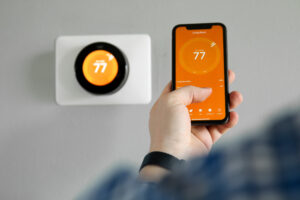

Think of smart home hubs as the brain of your home’s technology. It connects your lighting, climate control, security, motorized shades, and audio-video systems into one cohesive platform. Instead of isolated gadgets that barely communicate, you get a unified system that works together intelligently. In this guide, we are going to break down exactly what a smart home hub is, how it works on a technical level, and why it is essential for an integrated home. If you are planning a new build, upgrading your current home, or simply trying to make sense of your growing collection of smart devices, this article will give you the clarity you need.
What Is a Smart Home Hub?
Before you can choose the right system, you need a clear definition. A smart home hub is a centralized control system that connects and manages multiple smart devices across different communication protocols. In simple terms, it acts as the command center for your entire home.
A true smart home hub:
- Integrates devices that use Wi-Fi, Zigbee, Z-Wave, Bluetooth, and proprietary protocols
- Translates communication between devices that otherwise could not talk to each other
- Executes automations based on triggers, schedules, and conditions
- Provides a single interface for controlling multiple systems
Without a hub, you often end up juggling separate apps for lighting, security cameras, thermostats, and entertainment systems. That fragmentation leads to frustration. With a professional-grade smart hub, your home becomes a coordinated ecosystem rather than a collection of disconnected gadgets.
From a technical standpoint, the hub processes inputs from sensors, communicates with controllers, and executes pre-programmed logic. For example, when your security system detects motion after sunset, your smart home hub can trigger pathway lighting, send a notification, and adjust camera recording modes automatically.
What Devices Can a Smart Home Hub Control?
Now that you understand smart home hub technology at a foundational level, let’s talk about what it can actually control in your home. A professional smart home hub can manage nearly every major system under one interface.
Lighting Control
Smart lighting is often the first system homeowners automate.
A smart home hub can:
- Control dimmers, switches, and keypads
- Trigger scenes such as “Movie Night” or “Good Morning”
- Adjust lighting based on occupancy or time of day
- Integrate exterior landscape lighting with security systems
Instead of walking through the house flipping switches, one command can adjust dozens of fixtures at once.
Climate and Comfort
Your HVAC system is one of the largest energy consumers in your home. When integrated into a smart hub, you gain:
- Zoned temperature control
- Automated adjustments based on occupancy
- Integration with motorized shades to reduce heat gain
- Remote access through secure apps
This level of control increases comfort while improving efficiency.
Security and Surveillance
A professionally integrated smart home hub connects:
- Alarm panels
- Door and window sensors
- Smart locks
- Video doorbells
- Surveillance cameras
You can create logic-based automations. For example, when the system is armed in Away mode, doors automatically lock, lights turn off, and thermostats shift to energy-saving settings.
Audio and Video Systems
For homeowners who value entertainment, the hub becomes even more powerful.
It can integrate:
- Whole-home audio
- Home theaters
- Distributed video systems
- Outdoor entertainment zones
With one touch, you can start music in multiple rooms or lower shades and dim lights when the projector turns on.
Motorized Shades and Outdoor Systems
Motorized shading systems can automatically respond to:
- Time of day
- Sun position
- Temperature
- Security events
Outdoor systems such as gates, landscape lighting, and pool controls can also integrate seamlessly. The result is a cohesive experience rather than isolated automation.
What Makes a Professional Smart Home Hub Better Than DIY Systems?
At this point, you may wonder whether a consumer-grade system is enough. DIY smart home hubs often promise convenience at a lower upfront cost, but they operate very differently from professional control systems.
Most DIY ecosystems such as Google Home, Alexa, and Siri rely heavily on cloud-based processing. When you give a command like “Turn off the lights,” that request is typically sent from your device to a remote server, processed in the cloud, and then sent back to your home to execute the command. Even simple automations often depend on an active internet connection and third-party servers.
This architecture creates several limitations:
- If your internet connection goes down, many automations stop working
- Commands may experience latency due to cloud routing
- Sensitive data leaves your home network
- Long-term reliability depends on external platforms and updates
In contrast, a professional smart home hub processes commands locally within your home. When you press a keypad, trigger a sensor, or activate a scene, the instruction goes directly to the controller and then to the relevant systems. The data does not need to travel to external servers for processing. Your lighting, climate, security, and AV systems communicate within your own ecosystem.
This local processing model provides:
- Faster response times
- Greater reliability even during internet outages
- Enhanced privacy and data control
- More stable long-term performance
Professional smart home hubs are designed to manage dozens or even hundreds of devices without degradation in performance. Rather than relying on cloud-based shortcuts, they are engineered from the ground up for integrated, whole-home automation.
What Should You Look for When Choosing a Smart Home Hub?
Choosing the right smart home hub is about more than brand recognition. You should evaluate performance, security, compatibility, and long-term flexibility.
Here are key factors to consider:
Compatibility Across Protocols
Your hub should support multiple communication standards. A platform that only works with one ecosystem will limit future expansion.
Scalability and Future-Proofing
Technology evolves quickly. A professional smart hub should allow you to:
- Add rooms or zones later
- Integrate new device categories
- Update software without replacing hardware
Planning for growth prevents expensive overhauls later.
Security and Data Privacy
Smart home hubs control sensitive systems like locks and cameras. Enterprise-level encryption and secure network design are critical.
User Interface and Ease of Use
Even the most advanced system must be intuitive. Touch panels, mobile apps, and voice integrations should be simple and consistent across devices.
Why AIS Prefers Nice as Its Platform
At AIS, we position Nice as our preferred smart home hub platform for several reasons.
Nice delivers a professional-grade automation ecosystem designed specifically for high-performance residential environments. Unlike many consumer platforms, Nice emphasizes:
- Centralized local processing
- Robust security architecture
- Scalable system design
- Seamless integration with lighting, AV, climate, and access control
Nice systems are engineered to reduce complexity while increasing reliability. They allow homeowners to manage everything through a streamlined interface without sacrificing performance. AIS chooses Nice because it aligns with our philosophy of long-term system stability and seamless integration. When you invest in a smart home hub, you should not worry about compatibility or system limitations five years down the road.
Frequently Asked Questions About Smart Home Hubs
As homeowners research smart home hubs, several common questions come up.
Do I need a smart home hub if devices already connect to Wi-Fi?
While many devices work individually over Wi-Fi, they often cannot communicate directly with each other. A smart home hub creates unified automation and central management.
Can I upgrade my system later?
Yes. When designed correctly, professional smart home hubs allow you to expand lighting zones, add new rooms, or integrate new technologies without replacing the core system.
Is professional installation necessary?
For basic automation, DIY may work. However, for integrated lighting, AV, climate, and security systems, professional installation is best for reliability, clean wiring, secure networks, and optimized programming.
How secure are smart home hubs?
Professional systems prioritize encrypted communication, local processing, and secure network architecture. When properly installed, they are significantly more secure than loosely connected DIY ecosystems.
Start Automating Your Home Today with AIS
A smart home hub is far more than a convenience feature. It is the foundation that allows every connected device in your home to communicate, automate, and operate as a single intelligent system. Choosing the right platform means thinking beyond today’s devices and planning for how your home will grow and evolve in the future. At AIS, we specialize in turning your vision into reality. With decades of experience in smart home planning, installation, and system integration, we help clients create homes that are not only high-tech but also highly livable. From the earliest planning stages to ongoing support, our team makes sure every part of your system works in harmony so your home is smarter, simpler, and more enjoyable to live in. Contact us today to get started or use our budget calculator to plan expenses.