
In-ceiling speakers promise something most audio gear can’t: great sound with almost nothing to look at. No towers in the corners, no cables along the baseboards, no shelf space given up to boxes. Just a few discreet grilles overhead and music that seems to come from the room itself. It’s an appealing idea, and it’s also a permanent one, because getting there means cutting into your ceiling and running wire through it. That makes the question worth asking before anything gets installed. Do in-ceiling speakers actually sound good, or do you give up performance to get the clean look? The answer depends on the room, what you plan to listen to, and how the system is designed and installed. In this post, we’ll look at what in-ceiling speakers are, where they shine, where they come up short, and how to tell whether they’re worth it for your home.
What Are In-Ceiling Speakers?
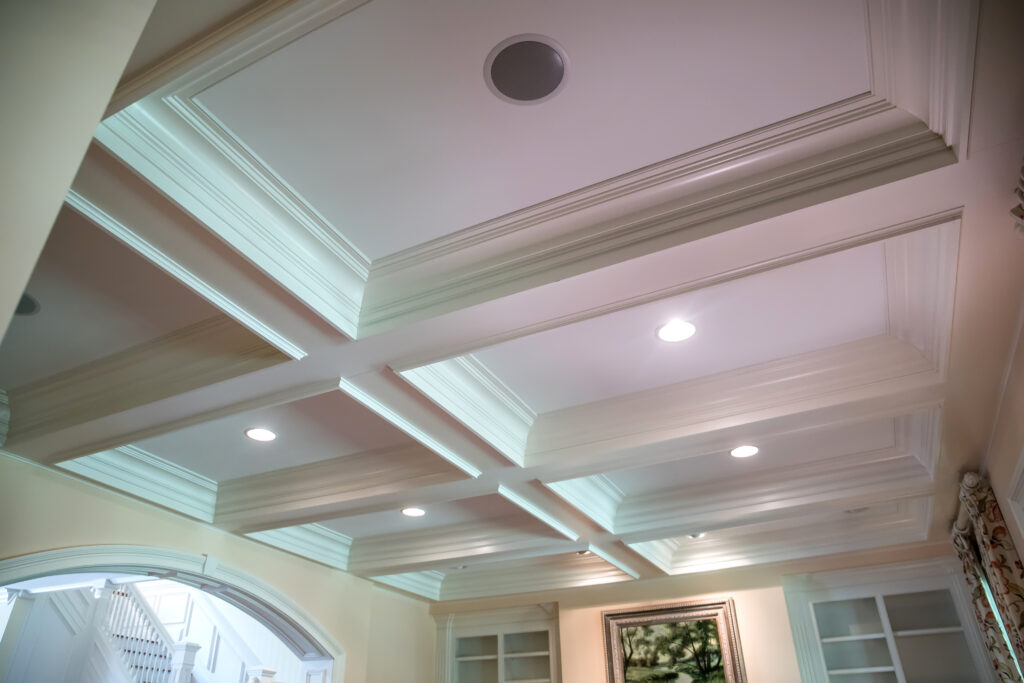
In-ceiling speakers are loudspeakers installed directly into ceiling drywall, sitting flush with the surface behind a thin grille. Most measure 6 to 8 inches across and sit in the ceiling cavity instead of a traditional speaker cabinet. They belong to the broader category of architectural speakers, which includes in-wall and fully invisible speakers.
Unlike conventional box speakers, which have carefully engineered enclosures, in-ceiling speakers rely partly on the surrounding cavity for their sound. Higher-end models may include back boxes to improve bass consistency and reduce sound traveling into adjacent rooms.
There are several types to consider:
- Standard speakers: Basic woofers and fixed tweeters for general listening.
- Pivoting or angled speakers: Adjustable tweeters that direct sound toward the listening area.
- Stereo-input speakers: Combine left and right channels in one unit, ideal for smaller spaces.
- Dolby Atmos speakers: Designed to deliver overhead effects in immersive audio systems.
Like traditional home audio speakers, quality varies based on driver materials, crossover design, and power handling. Choosing the right model depends on the room and how you plan to use it.
Where In-Ceiling Speakers Make the Most Sense
In-ceiling speakers are best for filling a space with an even, pleasant sound rather than pinpointing a performer on a stage. They are especially useful for background music and spaces where traditional speakers would take up valuable room.
Whole-home audio is the classic case. Speakers installed throughout kitchens, hallways, bedrooms, and living areas can connect to a whole-home audio system, allowing independent volume and music control in different zones. The Home Technology Association also highlights these benefits in its guide to hidden audio.
Kitchens and bathrooms are also good candidates because counter space is limited. Moisture-rated models work well in humid environments, while specially designed outdoor speakers can provide audio on covered patios.
Media rooms and open living spaces benefit greatly from discreet speaker placement. In-ceiling models can complement front-facing speakers and provide surround or height effects without cluttering the floor. This makes them useful for homeowners who want immersive surround sound while keeping a clean room design.
In-Ceiling Speakers for Dolby Atmos
In a Dolby Atmos system, in-ceiling speakers go from convenient to preferred in its overhead audio layer. Atmos adds height channels that make sounds appear to come from above. In a 5.1.2 or 7.1.4 setup, the final number represents these overhead speakers. Dolby’s speaker setup guidelines recommend positioning overhead speakers relative to the listening area for accurate sound placement.
Unlike upward-firing Atmos speakers, which bounce sound off the ceiling, in-ceiling speakers deliver sound directly from above. This makes them more reliable in rooms with vaulted ceilings, beams, or acoustic treatments. For dedicated home theaters, in-ceiling speakers are an easy call for height channels, while traditional or in-wall speakers handle the main front soundstage.
Where In-Ceiling Speakers Fall Short
In-ceiling speakers offer convenience and clean aesthetics, but they have limitations worth considering.
- Sound imaging is one of the biggest drawbacks. Music and movie dialogue are generally intended to come from ear-level speakers in front of the listener. Ceiling-mounted speakers struggle to reproduce that positioning accurately, making them less suitable for critical hi-fi listening or front theater channels.
- Bass performance is another consideration. Many in-ceiling speakers cannot reproduce deep bass effectively because they lack traditional speaker enclosures. For movies and bass-heavy music, pairing them with a dedicated subwoofer provides better low-frequency performance.
- Placement restrictions can also affect performance. Ceiling joists, plumbing, ductwork, and lighting fixtures may prevent speakers from being installed in ideal locations. Sound can also travel through ceiling cavities into rooms above.
- Finally, installation is relatively permanent. Moving or upgrading speakers may require drywall repairs, especially if replacement models have different cutout dimensions.
These limitations do not make in-ceiling speakers a poor choice. They simply mean that speaker placement, room layout, and system design should be considered before installation.
Are In-Ceiling Speakers Worth It?
For most of the house, yes. For the front of a serious home theater, no. That is the short version, and it holds up well in practice.
If you want music in the kitchen, bathrooms, hallways, and patio, in-ceiling speakers are the right tool and the only one that disappears completely. If you are building a theater or a media room with Atmos, they are the best way to handle the height channels. If you want a stereo pair for serious listening or the front stage of a theater, put your budget into speakers at ear level and let in-ceiling models fill the supporting roles.
Proper system design matters more than simply choosing expensive speakers. Following professional guidelines like the CEDIA/CTA-RP22 Immersive Audio Design Recommended Practice helps ensure speakers are positioned for optimal performance.
Installation difficulty is another factor. Replacing an existing speaker with a similarly sized model may be manageable for homeowners. However, installing new wiring through finished ceilings, navigating joists and insulation, and selecting appropriate amplifiers can quickly become complicated.
For new construction or remodeling, pre-wiring for audio before drywall installation can significantly reduce costs and installation challenges.
Ultimately, in-ceiling speakers are most worthwhile when they are part of a thoughtfully designed audio system. Professional planning helps ensure the speakers work together, deliver balanced coverage, and blend naturally into the home.
Plan and Install Your In-Ceiling Audio With AIS
In-ceiling speakers are worth it when they are matched to the right job. For whole-home music, kitchens, bathrooms, covered patios, and the height channels in a Dolby Atmos theater, they deliver sound that fills the space without taking up any of it. They are a weaker fit when they are asked to carry the front of a home theater on their own, or when they are dropped into a ceiling with no plan for placement. Swapping a speaker into an existing cutout can be a manageable weekend project, but running wire through finished ceilings, working around joists and insulation, and tuning the system to the room is where professional design and installation pay off. AIS designs and installs whole-home audio systems and custom home theaters across Northern Utah, including in-ceiling and in-wall speakers, hidden wiring, and simple control from your phone or a keypad. If you’re thinking about in-ceiling speakers, contact us today to talk through your space, or use our budget calculator to see what your project could look like.