
Good lighting can completely change the way a kitchen looks, feels, and functions, but some of the most important lighting features are the ones homeowners do not always think about right away. Under cabinet lighting is a great example. It may seem like a small upgrade at first, but it can make a major difference in everyday life by adding light exactly where it is needed most. From meal prep and cleanup to creating a warmer atmosphere in the evening, under cabinet lighting helps make the kitchen more comfortable and more usable.
Keep reading to find out what under cabinet lighting is, how it works, what types are available, and why it has become such a popular feature in modern homes. We will also look at how it compares to other lighting layers, and why smart control can make it even more convenient and effective.
What Is Under Cabinet Lighting?
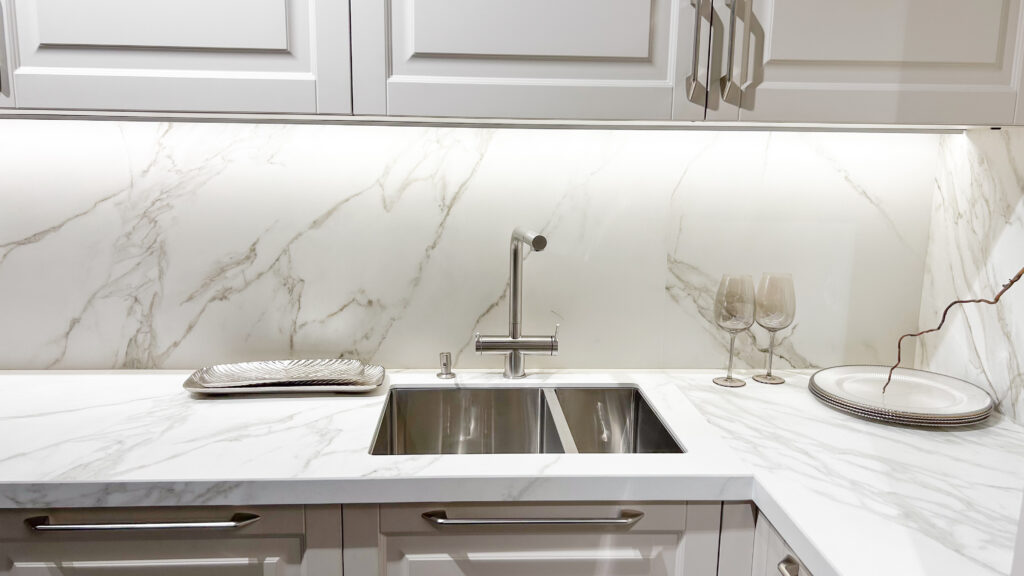
Under cabinet lighting is a layer of light installed on the underside of upper cabinets that washes the countertop with focused, downward-facing illumination. It is one of the most useful kitchen upgrades you can make because it lights the surface where the actual work happens. Overhead fixtures cast shadows when you stand in front of the counter, and under cabinet lighting fills those shadows in.
It is also a foundational piece of any layered lighting plan, sitting between the ambient overhead light and accent layers like toe kick or interior cabinet lighting. When all three layers are working together, the kitchen becomes one cohesive design rather than a patchwork of fixtures, which is the principle behind most thoughtful interior lighting design. You will see it specified in modern kitchen builds almost by default at this point, and for good reason. Even on its own, it elevates the way a kitchen feels.
While the kitchen is the most common application, the same idea works in any space with upper cabinetry or floating shelves. Home bars, butler’s pantries, mudroom drop zones, garage workbenches, and bathroom vanities all benefit from a clean wash of light at counter level. Once you start noticing it, you tend to want it everywhere.
How Does Under Cabinet Lighting Work?
Most modern under cabinet lighting uses LED tape or low-voltage linear fixtures mounted along the front edge of the cabinet bottom. The front-edge mounting position matters more than you might think. If the strip sits too far back, you get a hot spot on the backsplash and a shadow on the work surface. Mounted toward the front, the light spreads evenly across the entire countertop.
The LEDs run off a low-voltage driver, typically 12V or 24V DC, that converts standard household power down to a safe level for the strip. Drivers are usually hidden inside an upper cabinet or behind a panel near the kitchen, with low-voltage wire routed through the cabinet backs. Like any quality run of linear lighting, the strip should sit inside an aluminum channel with a frosted diffuser to eliminate visible LED dots and protect the tape over time.
Control happens through a wall switch, an in-cabinet rocker switch, a motion sensor, or a smart system, depending on how integrated the lighting plan is. The smart side gets its own section further down.
What Are the Different Types of Under Cabinet Lighting?
Not every under cabinet light is built the same way, and the type you choose has a real impact on how the kitchen looks at night. Here are the main options to know:
- LED strip lighting. The most popular choice in custom builds. Thin, dimmable, and nearly invisible when properly recessed in an aluminum channel. Best for a continuous, hot-spot-free wash of light.
- Linear bar fixtures. Pre-built rigid fixtures that can be hardwired or plugged in. Easier to retrofit than tape light, but slightly more visible under the cabinet.
- Puck lights. Small round fixtures spaced along the cabinet bottom. Quick to install and budget-friendly, but they create distinct pools of light with darker zones in between.
- Tape light with tunable white. A premium option that lets you shift between cool, focused task light during prep and warm, ambient light at dinner.
Strip lighting tends to win on aesthetics and performance, but the right choice depends on your existing wiring, your budget, and whether the install is part of a full remodel or a quick upgrade. If you are pre-wiring during a build, baking the layout into your low-voltage lighting plan makes everything cleaner.
What Are the Benefits of Under Cabinet Lighting?
The most obvious benefit is task visibility. A countertop with proper light makes food prep noticeably easier. Colors look accurate. Shadows disappear. You stop relying on the overhead can lights that were never aimed at the counter in the first place.
Beyond function, under cabinet lighting changes the way a kitchen feels at different times of day. In the morning, it gives you focused light without flooding the room. In the evening, dimmed to a low warm setting, it becomes a soft accent that lets you walk through for a snack without flipping on every fixture overhead. That flexibility is one of the simpler ways to bring smart lighting energy savings into the kitchen, since you are using only as much light as the moment calls for.
It also adds a custom, designer-level finish that buyers tend to notice the moment they walk in.
How Can Under Cabinet Lighting Integrate with Smart Home Systems?
This is where under cabinet lighting goes from useful to genuinely impressive. Once the strip is tied into a home lighting automation system like Lutron or Control4, it stops being a single switch on the wall and becomes part of how the kitchen behaves throughout the day.
Common automations include a scheduled fade-on at sunset, a dim path-light setting after midnight, and motion-triggered activation when you walk in for a late-night glass of water. Tunable white strips can shift toward cooler temperatures during morning prep and warmer tones at dinner, which lines up with the broader principles behind human-centric lighting. You can also tie the under cabinet layer into broader scenes, so a single “cooking” press brings up the right mix of overheads, pendants, and counter lighting at once.
The key is choosing a driver and dimmer that play nicely with your control platform. Not every LED strip dims smoothly, and pairing the wrong components can leave you with flicker or an audible buzz. This is one of the spots where professional design pays off, especially in a smart kitchen where multiple systems need to work together.
AIS Can Help Design and Integrate Under Cabinet Lighting
Under cabinet lighting is one of the most effective ways to improve both the function and feel of a kitchen. It adds light exactly where homeowners need it most, helps reduce shadows on countertops, and contributes to a more layered and polished lighting design. Whether the goal is better task lighting, a warmer evening atmosphere, or a more custom-looking space, under cabinet lighting offers a practical upgrade that can make a noticeable difference every day. AIS specializes in lighting design and smart lighting planning and installation, and our team can help homeowners create under cabinet lighting and smart lighting systems that work together beautifully. From design and wiring strategy to control and integration, AIS can help bring the whole lighting plan together in a way that feels both polished and easy to use. Contact us today or use our budget calculator to plan expenses!