
If you have ever walked into a kitchen and noticed a soft glow coming from beneath the cabinets, you have probably already seen toe-kick lighting in action. It creates a warm layer of light near the floor that can make cabinetry feel more elevated, help with nighttime visibility, and add depth to the overall lighting design. What seems like a small detail can actually play a big role in how comfortable, functional, and finished a space feels. In this post, we will break down what toe kick lighting is, how it works, where it is commonly used, and why so many homeowners include it in modern lighting plans. We will also look at the benefits it offers, how it compares to other lighting options like under-cabinet lighting, and why smart control can make it even more useful in everyday life.
What Is Toe Kick Lighting?
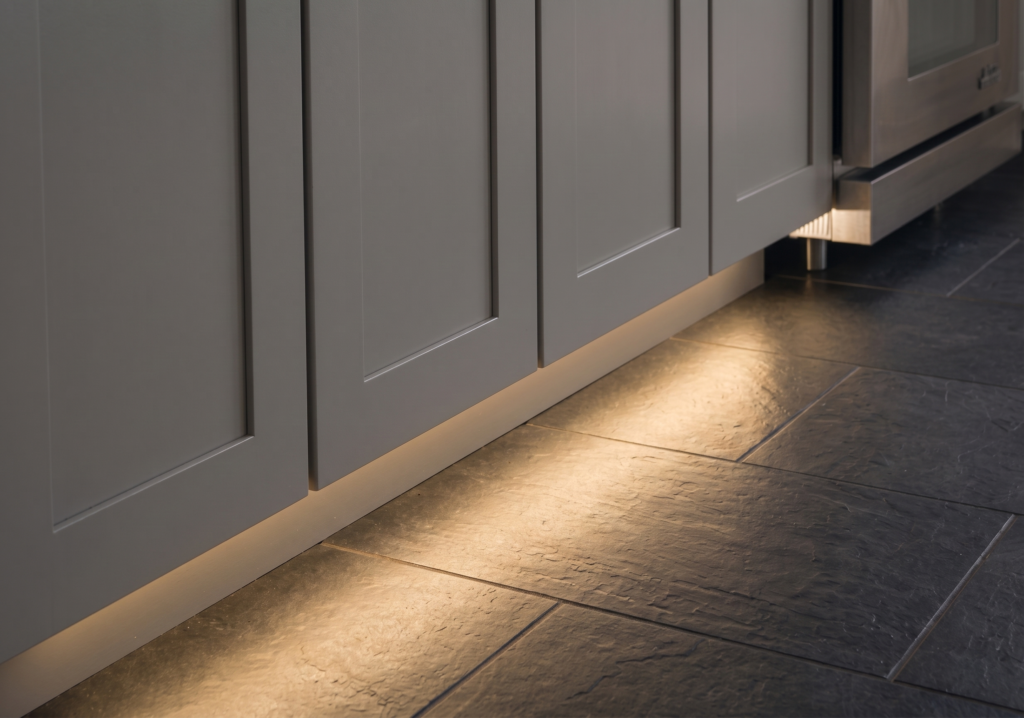
Toe kick lighting refers to low-voltage LED light that is installed inside the recessed area at the bottom of cabinetry, vanities, or built-ins. That recess, called the toe kick, is typically three to four inches tall and sits just above the floor. When light is added to that hidden ledge, it casts a soft, indirect glow across the floor that visually lifts the cabinet off the ground.
You will most often see it specified in modern kitchen builds, but it has quietly become a staple of thoughtful interior lighting design across the home. The effect is subtle. It does not draw attention to itself the way a pendant or sconce would, but it changes how a room reads at a glance, making cabinets feel like they are floating and floors feel cleaner.
Because it works as a layer rather than a focal point, toe kick lighting is almost always paired with other sources, much like how linear lighting creates continuous architectural detail. It is one of those finishes homeowners rarely notice until it is missing.
How Does Toe Kick Lighting Work?
Most modern toe kick installations use a low-voltage LED tape light tucked into an aluminum channel with a frosted diffuser. The diffuser matters more than people realize. Without one, you get visible hot spots where each LED sits, and the line of light looks dotted instead of continuous. With a good diffuser and a strip, the glow looks smooth and intentional.
The system runs off a low-voltage driver that converts standard household power down to a safe level for the strip. The driver is hidden inside an adjacent cabinet, in a basement, or in a mechanical chase, and the wiring runs through the toe kick before flooring goes in. That is why this detail is much easier to plan during a remodel or new build than it is to retrofit later.
A few specs worth knowing before you commit:
- Color temperature. A warm range of 2700K to 3000K tends to look most inviting at floor level. Anything cooler can feel clinical.
- CRI rating. A Color Rendering Index of 90 or higher keeps wood tones, stone, and tile looking accurate.
- IP rating. Bathrooms and laundry rooms call for a moisture-rated strip, and kitchens are smart to plan for splashes.
Control happens through a wall switch, a dimmer, a motion sensor, or a smart system. We will get into the smart side a little further down.
Where Can Toe Kick Lighting Be Used in a Home?
The kitchen is the obvious starting point, and it is where most homeowners encounter toe kick lighting first. Anywhere there is a base cabinet, there is an opportunity, and the same idea translates to a lot of other rooms once you start looking for it.
Bathroom vanities are a natural fit. A soft glow at the floor makes a 2 a.m. trip far easier on the eyes than flipping on the overheads, which is one reason the detail shows up so often in smart bathroom designs. Primary closets and dressing areas benefit in the same way, especially when paired with motion activation so the light comes on automatically when you walk in.
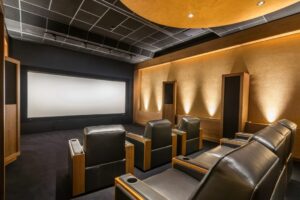
Built-in entertainment centers, floating media consoles, and library shelving can use a thin run of light underneath to make heavy millwork feel lighter. Hallway built-ins, mudroom benches, and kitchen islands with a recessed base all read better with a low layer of light. In a finished basement or theater room, a discreet strip along a bar or seating riser doubles as a safety feature, in line with the layered approach used in home theater lighting plans.
What Are the Benefits of Toe Kick Lighting?
The biggest reason homeowners ask for toe kick lighting is how it makes a room feel. A space lit only from above can feel flat, no matter how nice the fixtures are. Adding a low layer rounds out the design and gives the eye somewhere else to land. It is one of the easiest ways to take a kitchen from finished to genuinely custom.
Beyond looks, there is real day-to-day function. A soft floor-level glow gives you enough light to move around at night without waking up the rest of the house, and it makes uneven thresholds and step-downs visible. It also reduces the temptation to flip on overheads for small tasks, which can quietly cut energy use over time when paired with broader smart lighting strategies.
A few benefits are:
- A more layered, designer feel. The room gains visual depth without adding clutter.
- Safer nighttime navigation. No more fumbling for switches in a dark kitchen.
- Better resale appeal. Buyers notice the quality of finishes, even when they cannot name what they are looking at.
Is Toe Kick Lighting Better With Smart Control?
A toe kick on its own is great. A toe kick connected to a home lighting automation system is a different experience entirely. Once the strip is tied into a platform like Lutron or Nice, the light starts behaving the way you actually live.
You can set it to fade on at sunset, dim slowly as the night goes on, and switch to a very low warm setting after midnight so a quick glass of water does not require a full kitchen scene. Motion sensors can trigger it without any switch at all, which is especially useful in bathrooms and closets. You can also group it into a goodnight scene that turns the rest of the house off while leaving toe kicks on as a path light.
The difference between standalone and smart-controlled is the difference between a feature you turn on and a feature that works on your behalf. For homeowners already investing in smart home technology and interior design, it is one of the easiest wins to add.
Why Homeowners Choose AIS for Smart Lighting Design and Integration
Toe kick lighting is a simple idea, but it can have a big effect on the way a home looks and feels. Adding a soft glow at the base of cabinets, vanities, or built-ins creates a more layered design while improving nighttime visibility and giving the space a more custom appearance. It feels even better when paired with other lighting layers and smart controls that make the system easier to use every day. AIS specializes in lighting design and smart lighting planning and installation, and our team can help elevate a home with toe kick lighting and smart systems that feel seamless, intentional, and easy to enjoy. Whether you are planning a kitchen update, building a new home, or refining the lighting throughout your space, AIS can help create a lighting solution that looks beautiful and works the way you want it to. Contact us today to get started.