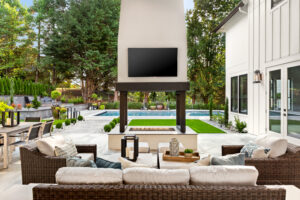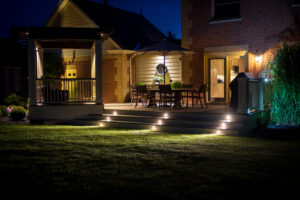


Low voltage landscape lighting is one of the most effective ways to make a home look better, feel safer, and become more usable after dark. From softly lit walkways to dramatic tree uplighting and warm patio lighting, the right outdoor lighting system can completely change how a property feels at night. It is not just about adding lights to the yard. It is about creating a thoughtful lighting design that highlights the home, improves visibility, and connects outdoor spaces to the way homeowners actually live. In this post, we will explain what low voltage landscape lighting is, how it works, where it can be used, what benefits it offers, and why professional design and smart integration can make such a difference.
What Is Low Voltage Landscape Lighting?
Low voltage landscape lighting is an outdoor lighting system that runs on 12 volts instead of the standard 120 volts that powers most things in a home. A transformer steps the household current down to a safer, lower voltage that powers the fixtures throughout the yard. That single design choice is what makes this style of lighting so popular for residential outdoor spaces. It is safer to work with, more energy efficient, and allows for fixtures that are smaller, more discreet, and easier to position exactly where they are needed.
The other reason it is so widely used is because it pairs naturally with LED technology. Modern LED low voltage fixtures last for years, use very little power, and produce the kind of warm, controlled light that makes a yard feel intentional rather than over lit. Industry organizations like the Association of Outdoor Lighting Professionals have built entire certification programs around designing and installing this kind of low voltage residential lighting properly, which gives homeowners a useful benchmark when choosing a professional.
How Is Low Voltage Lighting Different From Standard Outdoor Lighting?
Standard outdoor lighting, sometimes called line voltage lighting, runs on the same 120 volts that powers indoor outlets and lights. It is the type of system used for floodlights, security lights, and some large architectural fixtures. Line voltage works well in those applications, but it comes with tradeoffs that make it less ideal for the kind of layered, designed lighting most homeowners want for their yard.
Here are the most important differences between the two:
- Voltage and safety. Low voltage runs at 12 volts, which is much safer to work around. Line voltage runs at 120 volts and requires more involved electrical work, often including conduit and permits.
- Fixture size. Low voltage fixtures are typically smaller and easier to hide within plant beds, along walkways, or tucked into architectural features. Line voltage fixtures tend to be larger and more visible.
- Installation flexibility. Low voltage wiring is buried just a few inches below the surface and can be repositioned as the landscape grows in. Line voltage wiring is more permanent and harder to modify.
- Light quality. Low voltage LED fixtures produce a softer, warmer light that flatters a home and yard. Line voltage often produces brighter, harsher light better suited to security than ambiance.
- Energy use. Low voltage systems use less electricity overall, especially with LED bulbs, which keeps monthly utility costs lower over time.
For most outdoor residential applications, low voltage is simply the better tool. Line voltage still has its place for high-output security fixtures or specific architectural needs, but the bulk of a thoughtful outdoor lighting plan will be built on a low voltage system.
How Does Low Voltage Landscape Lighting Work?
A low voltage landscape lighting system has a few core parts working together. Low voltage cable runs underground throughout the yard to each fixture.
The fixtures themselves come in several styles, each designed for a different purpose:
- Path lights softly illuminate walkways, garden borders, and driveways so people can see where they are going without being blinded.
- Uplights sit at ground level and shine upward to highlight trees, columns, or architectural features.
- Downlights mount higher up and cast light downward to mimic natural moonlight across patios, decks, or pathways.
- Well lights sit recessed into the ground and direct light upward without showing the fixture itself.
- Deck and step lights are small fixtures built into stairs, railings, or seating areas to add safety and atmosphere.
- Hardscape lights are slim, low-profile fixtures that tuck under stone caps or ledges to wash light across walls and walkways.
Then there are the controls. A basic system might use a timer or a photocell that turns the lights on at dusk and off at a set time. A more advanced system uses a smart home automation hub like Nice, allowing homeowners to control everything from their phone or control hub, set custom scenes, or sync the lighting with the rest of the home.
What Are the Benefits of Low Voltage Landscape Lighting?
Homeowners choose low voltage landscape lighting for a lot of reasons, and most of them go beyond simple aesthetics. Here are the benefits that come up most often when planning an outdoor lighting project.
Curb appeal and home value. A well-lit home looks more polished, more inviting, and more valuable. Outdoor lighting is one of the few upgrades that delivers visual impact both during the day, through clean fixture choices, and at night, through the lighting effect itself.
Safety and visibility. Walkways, stairs, and entry points become easier to navigate after dark. Guests can find the front door, family members can move through the yard without tripping, and the perimeter of the home is no longer pitch black.
Security. A property that is thoughtfully lit is far less attractive to anyone looking to cause trouble. Layered lighting eliminates the dark corners and hiding spots that an unlit yard offers, without turning the home into a stadium. Outdoor lighting also pairs well with a broader home security system, giving cameras and motion sensors more to work with after dark.
Outdoor usability. Patios, decks, fire pits, pools, and outdoor kitchens become spaces homeowners actually use after dark. That extra usable time outside is often the single biggest lifestyle change people notice once a system is installed.
Highlighting the landscape investment. Most homeowners have already invested in trees, gardens, hardscape, and architectural features they love. Lighting brings those features to life at night, when they would otherwise disappear into darkness.
Energy efficiency. Modern LED low voltage fixtures use a fraction of the power of older incandescent or halogen options, which keeps the system affordable to run.
When all of these benefits come together, the result is an outdoor space that looks better, feels better, and gets used more.
Is Low Voltage Landscape Lighting Better With Smart Control?
This is one of the most important questions homeowners ask, and the answer is almost always yes. A basic timer or photocell will turn lights on at dusk and off at a set time, and that is fine for a simple setup. But the moment a homeowner experiences what smart control adds to a landscape lighting system, the difference becomes obvious.
Smart control allows the outdoor lighting to behave the way the homeowner actually lives. With a connected system, lighting can be tied into scenes that change based on the time of day, the season, or the activity. A “Welcome Home” scene might light the driveway, walkway, and front entry as the family pulls in. An “Evening” scene might dim the path lights and bring up the uplights on trees and architectural features. A “Late Night” scene might leave only the perimeter lights on at low brightness for security.
Beyond scenes, smart control adds:
- Schedules that adjust automatically with sunrise and sunset throughout the year
- Integration with other smart home systems, like security cameras, motion sensors, and voice assistants
- The ability to group fixtures into zones that can be controlled independently
- Dimming control that lets homeowners tune the brightness to match the mood
When the landscape lighting is part of a broader smart home system, it stops being a separate thing that has to be managed and starts being a natural part of how the home operates. AIS designs systems where outdoor lighting works seamlessly with interior lighting, audio, security, and automation through platforms like Lutron and Nice.
AIS Can Help with Custom Landscape Lighting Design and Installation
Low-voltage landscape lighting is one of the best ways to improve the look, safety, and usability of a home’s outdoor spaces. It can highlight architectural features, light walkways, bring garden beds to life, and make patios, decks, pools, and backyards more enjoyable after dark. The best systems are not just a few fixtures placed around the yard. They are carefully designed lighting plans that use the right fixtures, placement, brightness, wiring, and controls to create a polished result. When smart integration is added, landscape lighting becomes even more useful through scenes, schedules, remote control, and automation that fits the way homeowners live. AIS specializes in professional landscape lighting design and installation in Northern Utah, along with smart lighting planning and integration that connects outdoor lighting to the rest of the home. Contact us today to get started or use our budget calculator to get an idea of pricing.